An Occupational Therapist Walked Thousands of Dark Hallways at Night. Here's What She Says Nearly Everyone Gets Wrong About the 3 a.m. Walk to the Bathroom.
Subhead: After years of home-safety visits, Nora W. says the dangerous (and sleep-wrecking) part of the night is rarely the dark itself. It's the way every light you've tried fails you.
[IMAGE: A dark hallway at about 3 a.m., a woman's hand flat on the wall, her bare feet just visible at the bottom of the frame, one small soft glow low on the wall ahead. Plain phone-photo feel in a real lived-in home, grainy low light, nothing glossy. Overlay text: "2:47 a.m."]
It's 2:47 a.m.
Somebody in your house is awake.
Maybe it's you.
Maybe it's the person you share a bed with.
Maybe it's your mother, two hours away, in a hallway you can't see.
Whoever it is, they're doing what everybody does.
They swing their feet to the floor.
They think, "I know the way."
And they walk it in the dark.
Left at the hamper.
Around the dresser.
One hand on the wall.
Nine times out of ten, nothing happens.
You get to the bathroom.
You get back to bed.
But you're awake now, and you won't sleep like you did.
And the tenth time?
I've seen the tenth time.
If you've already tried a night light, a phone flashlight or leaving the hall lamp on, and it still doesn't feel right, you're not doing it wrong.
Those fixes were built for the wrong moment.
I'll show you exactly why in a minute.
I'm Nora.
I'm an occupational therapist, and for more than twenty years my job has been to walk into people's homes and work out why they're hurting themselves in them.
Kitchens, stairs, bathrooms, hallways.
I've learned that a home tells you what's wrong with it if you're willing to stand in it at the right time.
The right time is 3 a.m.
The Night an "Expert" Went Down in Her Own Hallway
[IMAGE: A runner rug with its edge curled up on a hallway floor, shot low from floor level in dim light, with a slipper beside it. Real-home phone photo, slightly noisy, no staging. Caption: "The rug I told hundreds of families to throw out."]
I'd like to tell you I'm too careful for this story.
I'm not.
Last winter I got up at 3 a.m., half asleep, and walked to the bathroom with no light on.
The edge of a runner rug caught my toe.
It's the same rug I have told hundreds of families to throw out.
I went down on one knee and slapped my hand against the wall, and my wrist ached for three weeks.
Nobody was hurt badly.
I was lucky.
But I knelt there in the dark and I was furious at myself.
I know every hazard in that hallway.
I could have drawn you a map.
And I still couldn't see a single one of them.
That was the moment I stopped telling people to "be careful at night."
Because careful doesn't work when you're half asleep and you can't see the floor.
I needed to find out what actually does.
Luxgrove Motion Sensor Wall Light Early Winter Sale: 4 lights for $69 · 30-day returns See today's offer →
So I Did to My Own House What I Do to Everyone Else's
[IMAGE: A nightstand with a pen and a spiral notepad (a few scribbled lines visible) next to a phone, lit only by a dim bedside glow. Candid phone-quality, shallow focus, real bedroom. Caption: "Two weeks of notes, after every bathroom trip."]
When I do a home-safety visit, I don't just look.
I do a night walk-through.
Lights off, same route the person takes, same speed, same sleepy shuffle.
So I put a pen and a pad on my nightstand and did it to myself.
For two weeks, after every bathroom trip, I wrote down what went wrong.
"Fumbled for the switch."
"Phone glare."
"Couldn't see the floor past the door."
It felt a little silly.
But by day ten the same complaints were on the page, night after night.
And they were the same ones I'd heard in the homes of the people I visit.
Whether they were 35 or 85.
Every Light You've Tried Fails in the Same Way (Once You See It, You Can't Unsee It)
[IMAGE: Simple comparison graphic, three plain phone-style photos side by side of the same hallway: a plug-in night light lighting one patch by an outlet, a phone flashlight glare, a harsh overhead light. Labels: "Too late", "Too bright", "One spot". Flat, native look, no logos.]
Every light you've tried has the same problem.
You have to find it.
Or it's too bright, or too dim.
Or it only lights one spot.
The walk isn't one spot.
It's the bed, the door, the hall, the bathroom, and sometimes the stairs.
So here's something to try tomorrow morning.
Walk your route in daylight and count the dark stretches.
Most people find three or four.
Remember that number.
It matters later.
Why Everything You've Tried Was Built for the Wrong Moment
[IMAGE: A real kitchen drawer pulled open and full of old night lights, stick-on lights and loose batteries, shot from above with a phone. Overhead kitchen light, messy and honest, no brand labels. Caption: "The drawer every house has."]
When I ask families what they've already tried, I always get the same list.
❌ The phone flashlight. Light in the wrong hand, glare in your own face, and you have to find the phone first.
❌ The plug-in night light. It lights whatever is near the outlet, not where you walk.
❌ Leaving the hall lamp on. Nothing to find, but it lights the whole floor, and nobody sleeps properly.
❌ The big overhead light. The whole house is awake in half a second.
❌ Cheap stick-on lights. One setting, one spot, and they go flat right when you need them. And a drawer full of dead batteries.
None of these are stupid ideas.
Each one fixes a single problem and leaves the others standing.
That's why people say "I tried a night light and it didn't work."
They did try.
They tried one piece of a solution.
The Idea I Now Tell Every Family: Light That Gets There Before You Do
[IMAGE: Close-up of a small slim light glowing softly on a hallway wall at ankle-to-knee height, with the floor in front of it faintly lit, the rest of the hall dark. Phone-quality, real home, no logos, not a room-lighting shot. Caption: "Light that's there before you are."]After my two weeks with the notepad, I wrote down what the right light would have to do.
It would come on by itself, only when someone moves.
It would sit low, where the feet are, not up where the eyes are.
I could set the brightness and color myself.
I could put one on every stretch of the walk.
And I wouldn't need wiring or a drill.
I looked for it for a few weeks.
Then I found the Luxgrove Motion Sensor Wall Light.
It's slim, about four inches tall.
It sits on a small adhesive plate on the wall, and the light clicks onto the plate with a magnet.
No drilling.
No wiring.
It has three modes: night motion, all-day motion, and always on.
Night motion mode lights up only as you pass in low light.
You can change the color and brightness.
And when it needs charging, you lift it off the plate, plug in a USB-C cable, and click it back.
The plate never leaves the wall.
Why This One Does What Night Lights Never Did
[IMAGE: Product close-up: the magnetic lamp lifted off its adhesive plate on a wooden table, a USB-C cable plugged into its base. Daylight from a window, phone-camera feel, plain background. Caption: "Lift off. Plug in. Click back."]Here's how it answers all of that.
✅ Nothing to find. Night motion mode lights the route as you pass. Nothing to touch.
✅ You set how bright. Pick the color and brightness. I set mine low and soft.
✅ Every stretch covered. Remember the number you counted? Mine was four, so I put one light on each stretch.
✅ It doesn't turn into a chore. It only lights when you move, so it isn't working all night.
✅ No tools. Stick the plate, click the light on. If you rent, that's the part you'll like.
Now the honest part, because I'd never recommend something without it.
It isn't a room light.
It's a path light.
It's for dry, indoor spots only, and in a bathroom you keep it well away from the sink and the shower.
Check your wall finish before you stick it on.
And no light can promise you'll never fall.
It can't pick a rug edge up off the floor.
It just makes sure you can see it.
[REVIEW SLOT: real customer review about the doubt 'is one light enough, or do I need the pack?' goes here]
Same Walk, Four Different Reasons to Fix It: Which One Is Yours?
[IMAGE: Four-square collage of the same dark walk in four homes: a bedroom doorway, a hallway, stairs with a cat, a rental hallway with a bare wall. Each with one small glow low on the wall, phone photos, mixed real-home lighting. Labels: "3 a.m. trip", "Parent", "Pet", "Renter".]
I've found that people come to this for one of four reasons.
Here's what each one looks like.
The 3 a.m. bathroom trip: "I just want to get there without waking up for good"
[IMAGE: A couple asleep in a dim bedroom, one side of the bed empty, a soft low glow along the floor near the door. Candid phone-quality, grainy, no flash. Caption: "Back in bed before you're fully awake."]
You aren't afraid of falling.
You're afraid of being awake.
And you're afraid of waking the person next to you.
A low, soft light that's already on means no switch, no phone, and no glare.
You're back in bed before your brain has finished deciding whether it's morning.
The parent you worry about: "I can't be there at 3 a.m."
[IMAGE: An older woman in a cardigan walking down a hallway at night, one small soft light low on the wall beside her, the rest of the hall in shadow. Taken from behind, phone-quality, real home. Caption: "Her hallway, lit before she gets there."]
This is the one I hear most.
An adult daughter or son, two hours away, who's lying awake wondering about Mom's hallway.
You can't be there.
But a light along her path can.
I put three on my own mother's wall last weekend.
I slept better that night than I have in years.
[REVIEW SLOT: real customer review from a buyer who put lights in a parent's home goes here]
The pet on the stairs: "I almost stepped on the cat again"
[IMAGE: A cat sitting on a stair with a small soft glow low on the wall beside the staircase lighting the steps only, the rest of the house dark. Phone-quality, slightly blurry, real home. Caption: "Now you can see him."]
Dark stairs, a dark floor, and something that moves.
You can't see him.
He can't see you.
A light on the wall by the stairs shows you where the floor is, and where the cat isn't.
The renter with the switch at the wrong end
[IMAGE: A rental hallway with plain white walls, the switch far away at the end, one small light stuck low on the wall with a hand pressing the adhesive plate. Daylight, phone-camera feel. Caption: "No drilling. Nothing to fix when you leave."]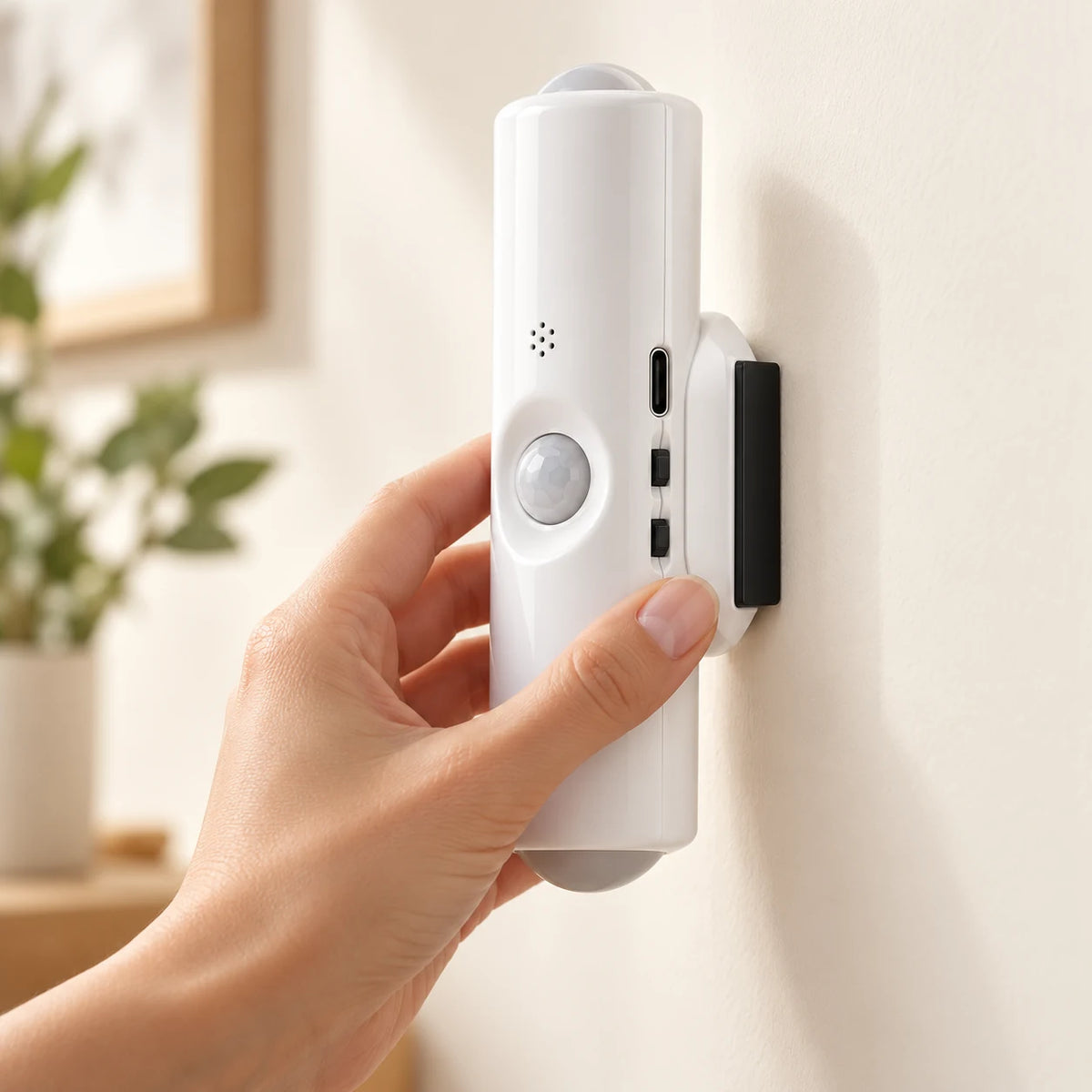
The light switch is at the bottom of the stairs, or at the far end of the hall.
You're not allowed to drill.
You're not rewiring a place you don't own.
The plate sticks on and the light lifts off, so there's nothing to repair when you leave.
[REVIEW SLOT: real customer review about the doubt 'does it damage the wall?', from a renter, goes here]
Different homes.
Same problem.
Same dark stretch.
The First Night I Walked It Half Asleep
[IMAGE: Before and after of the same hallway at night: left, fully dark; right, one soft glow low on the wall lighting the floor path only. Phone photos, identical angle, plain white labels "Before" and "After". No logos, not a room-lighting shot.]
I put four up on a Saturday afternoon: bed edge, bedroom door, hall, bathroom doorway.
That night I walked the route on purpose, half asleep, just to test it.
The light was already there.
I didn't touch a thing.
By the end of the first week, I noticed something odd.
I'd stopped bracing.
For years I'd done this walk, and taught others to do it, with one eye on the floor and my shoulders tight.
Now I was just walking.
I'll be honest with you.
I'm a therapist, so I'm careful about promises.
A light won't cure your sleep.
It won't cure your knees.
But it takes away the one thing the dark was adding to the walk.
What Happens After You Click (Your First Three Days With It)
[IMAGE: Flat-lay of the unboxed contents on a kitchen table: four lights, four adhesive plates and a USB-C cable. Window daylight, phone photo, slightly casual arrangement. Caption: "What arrives."]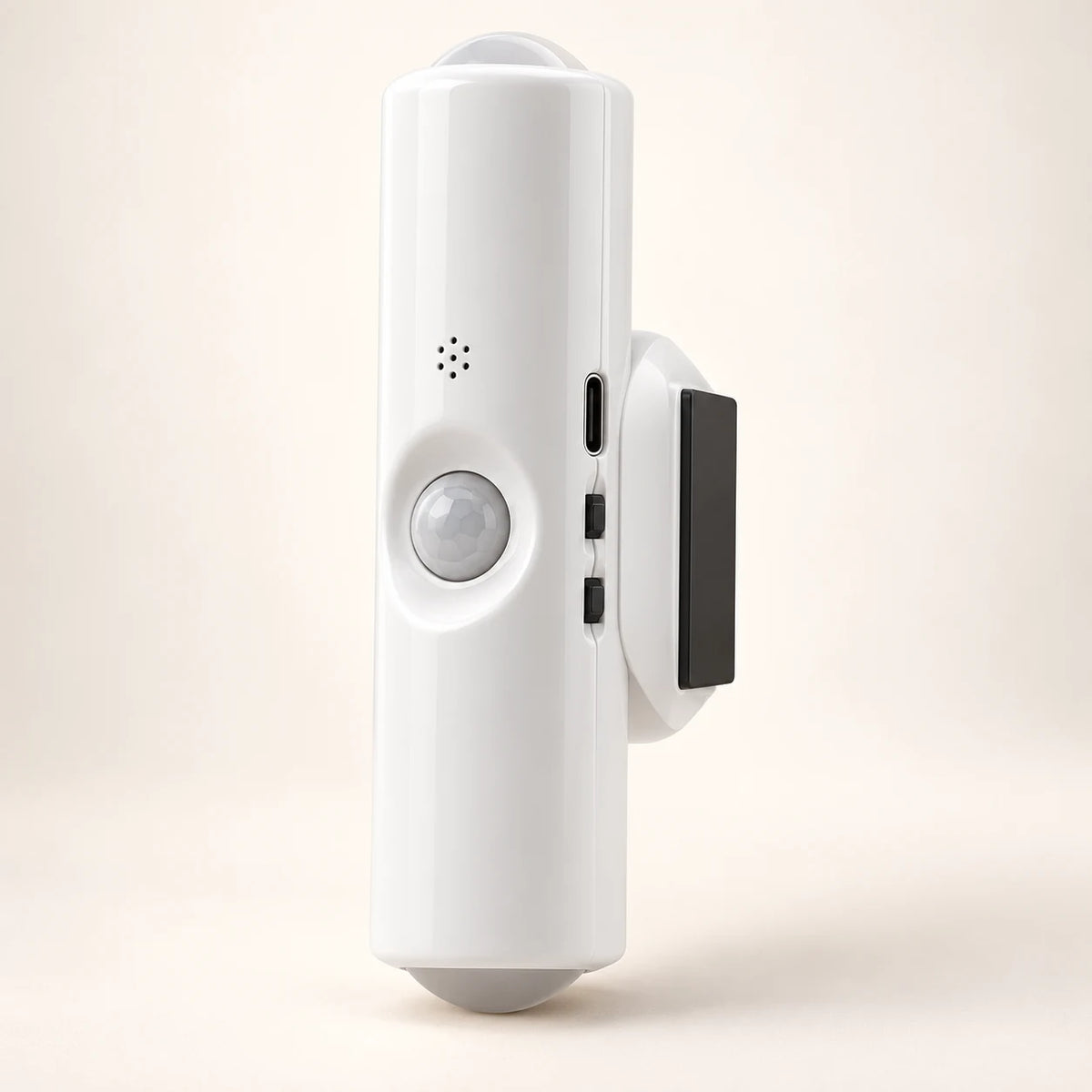
I like knowing what I'm getting into, so here it is.
What arrives.
Four lights, four adhesive plates and a USB-C cable, in one box.
How fast.
Your order ships from our US warehouse.
Setting up.
Pick your dark stretches.
Stick a plate on the wall at about knee to hip height.
Click the light on.
Choose night motion mode.
About five minutes for the whole route.
The first night.
Walk your route half asleep.
Notice that you didn't touch anything.
The first week.
Charge them when they ask.
Lift the light, plug it in, click it back.
If it isn't for you, you have 30 days to send it back.
Everything You Get When You Order the Whole Floor Pack Today
[IMAGE: Flat-lay of the contents: four lights, four adhesive plates and a USB-C cable, with a simple checklist overlay. Kitchen table, daylight, phone photo.]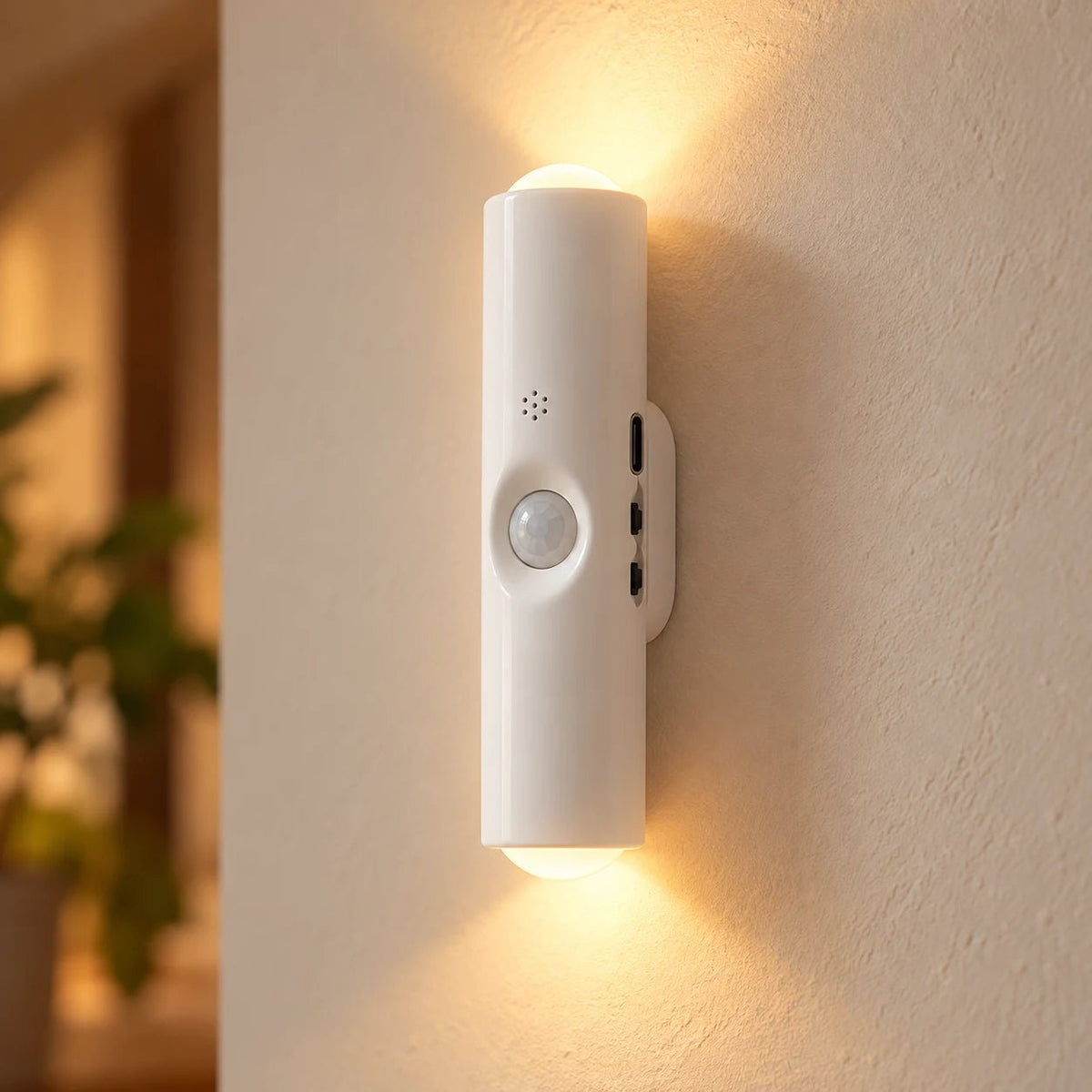
Here's what's in it.
✔ 4 Luxgrove Motion Sensor Wall Lights (buy 2, get 2 free), one for every dark stretch on the walk (bed edge, bedroom door, hall, bathroom doorway)
✔ 4 adhesive plates, so there's nothing to drill and nothing to wire
✔ Three modes on every light: night motion, all-day motion, always on
✔ Color and brightness control, so you set how bright it is
✔ Lift-off magnetic charging over USB-C, so you never pull the plate off the wall
✔ 30-day returns, so the risk is mine, not yours
Why $69 Is the Cheap End of Fixing This
[IMAGE: Simple comparison graphic on a plain background: one light with "1 light = 1 dark stretch" beside four lights along a bed-to-bathroom path floor plan with "4 lights = the whole walk". Flat, native, no logos.]Let me do the math the way I'd do it with a family.
A light you have to find still has you fumbling in the dark.
A cheap stick-on that runs flat gets replaced again and again.
A big-box motion light is a single light, and you need three or four.
And a fall, for the person who has one, costs far more than any of these.
Buy 2, get 2 free.
Four lights, $69.
That's about $17 a light.
Spread over a year, it's under 20 cents a night.
It's already selected for you on the next page.
The pack covers the whole walk.
Not one spot.
The whole walk.
Don't Decide Tonight on Hope. Decide on a Guarantee.
[IMAGE: A hand pressing a light onto its plate on a hallway wall at knee height, then a small box being closed up, in a candid phone-photo sequence. Daylight, real home. Caption: "30 days to decide."]Here's how I'd think about the risk.
You put the lights up.
You walk your route for a few nights.
If the walk doesn't feel different, you send them back inside 30 days.
That's it.
I wouldn't tell families to try anything I couldn't stand behind, and neither would Luxgrove.
The One Honest Reason to Move Now
[IMAGE: A dark window at 5 p.m. in winter with a hallway visible behind it and a soft low glow along the floor. Phone photo, dusk light. Overlay: "Early Winter Sale". No logos.]
The Early Winter Sale is on.
Four lights for $69, or two for $49.
There's a countdown on the page, and when it's gone, the sale price goes with it.
Winter is when the nights are longest, and you walk the most dark hours.
I'd rather you put them up this week than next February.
Get the Whole Floor Pack (4 lights, $69) →
Two Ways This Winter Goes
[IMAGE: Simple split graphic: left a dark hallway with a hand on the wall, right the same hallway with a soft glow low on the wall. Phone photos, plain white labels "Path 1" and "Path 2". No logos.]Walking it on memory
The light is already there
Path 1.
You keep walking it on memory.
Most nights, that works.
Path 2.
Tonight, you get up at 3 a.m.
And the light is already there.
You don't wake up.
Nobody else does.
And the walk, for once, is just a walk.
I know which path I'd choose.
I've walked both.
Nora W.
P.S. Before you close this page, count the dark stretches on your walk to the bathroom. That's how many lights you need. For most homes it's four, which is why the Whole Floor Pack is the one that makes sense.
P.P.S. If you're thinking of your mother or your father and a hallway you can't see from where you are, buy two sets. Two lights for you, two for them. Early Winter Sale pricing applies to both.
[DESIGNER COPY: sticky bar] Whole Floor Pack: 4 lights, $69 · 30-day returns · Check today's price →