WOOD CARE · LONG READ
I Almost Threw Out My Father's Desk. Then I Found Out Why It Looked Dead.
A long-form piece by Marcus W., who spent six months obsessing over the wood in his living room, and finally figured out what every product on the shelf gets wrong.
My father died eighteen months ago.
I'm not going to make this page about that. This page is about his desk.
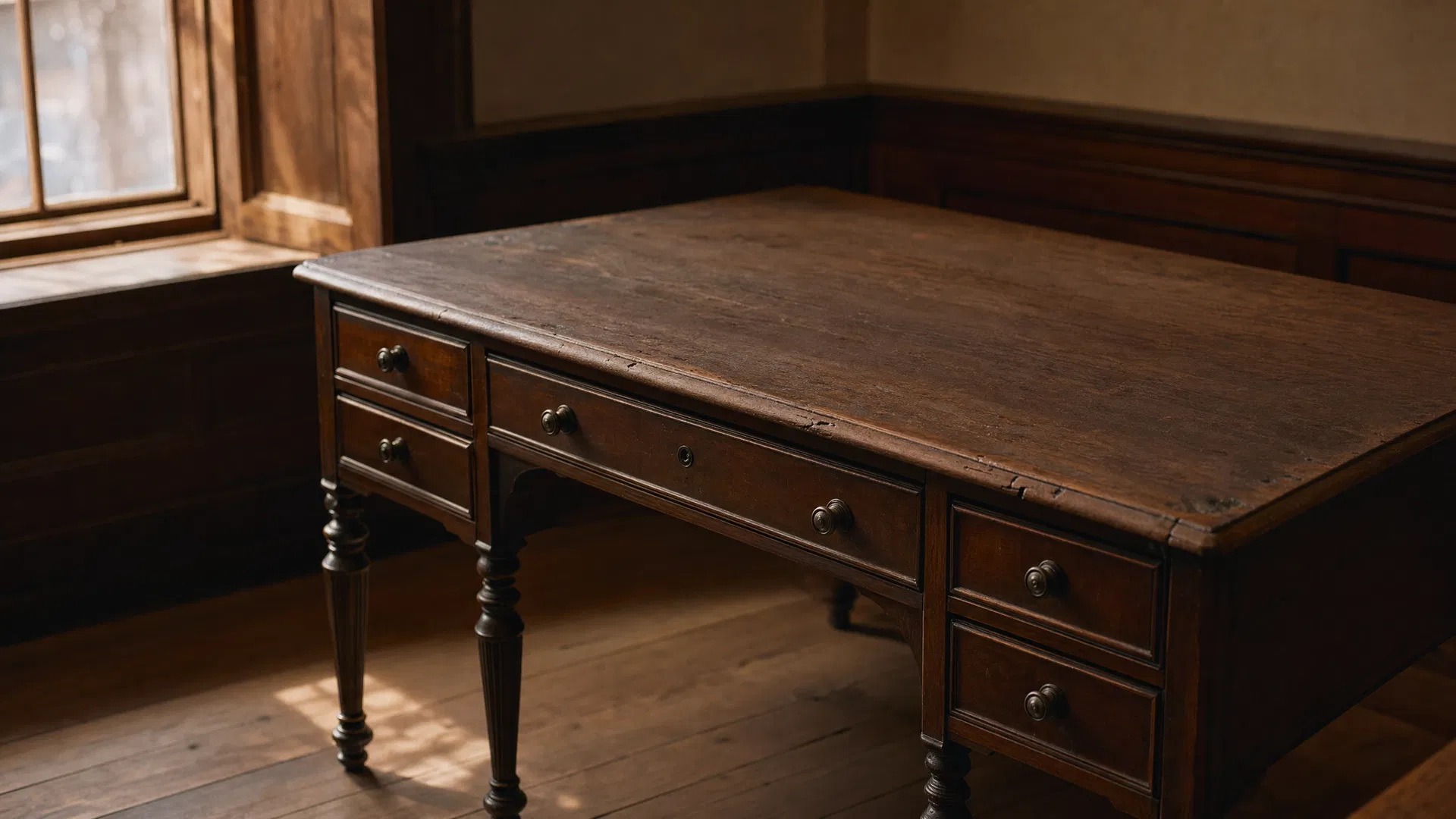
It's a walnut writing desk he bought in 1974 from a guy in Pennsylvania who built furniture by hand. My father wrote at it every morning for forty-five years. When he died, I drove out, loaded it into a U-Haul, and brought it to my house in Ohio.
That was June of last year.
By October the desk looked like it was dying.
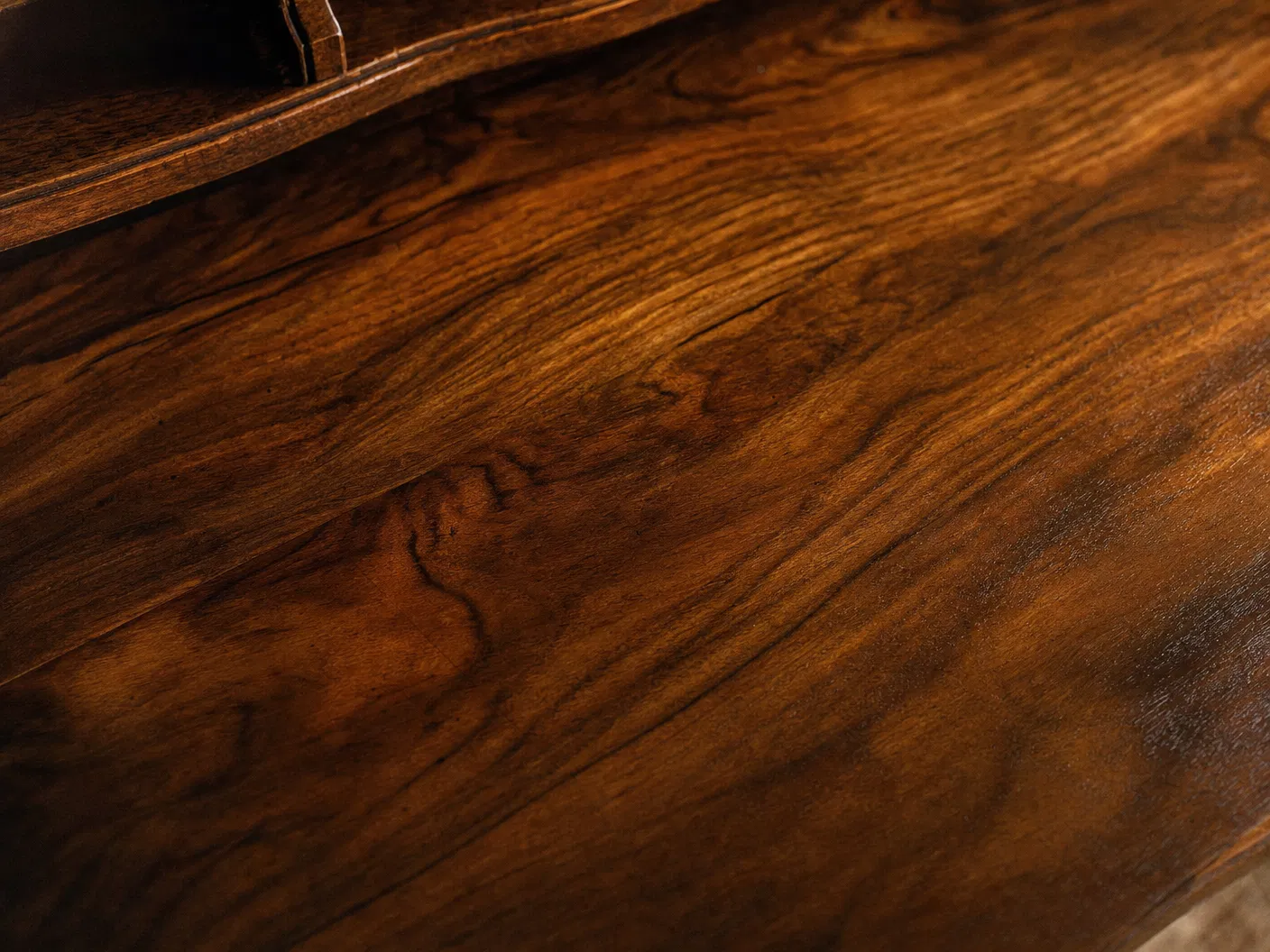
The walnut had gone gray. Not dusty. Gray. Like the color had been pulled out of it from the inside. The grain was still there but it sat flat. No depth. No warmth. The piece looked like a photograph of itself.
The finish on the writing surface had started to flake. Small chips. Fingernail-sized. One came off when I set down a coffee cup.
I covered it with a sheet and moved it to the garage, because I couldn't look at it anymore.
What I'm about to tell you, I learned the hard way.
Six months. $340 on products that did nothing. Two restoration quotes at $850 and $1,400. And finally a ninety-second conversation with a retired furniture guy that explained everything no one on the internet had been able to.
The wood in your house is not damaged. It is starving.
I know how that sounds.
I rolled my eyes when the guy said it to me too.
Then he walked me through it, and the entire wood care aisle at Home Depot stopped making sense.
A wood finish is two things. Not one. It is an oil that lives down inside the open pores of the grain, and a resin that hardens on top to protect it.
The oil is what makes wood look warm from the inside. It's what catches the light. Without it, walnut doesn't look like walnut. It looks like a piece of cardboard with stripes.
The resin is what protects the surface from water, hands, and dust.
Both are necessary. Neither one works alone.
"The wood isn't damaged. The oil left. That's it. That's the entire problem with 90% of the pieces I see."Tom Reilly — 38 years in furniture restoration, retired 2024
The oil evaporates a little every year. Faster in dry climates. Faster near radiators. Faster on pieces stored in garages, attics, or houses with forced-air heating.
Over twenty or thirty years, most of the oil that was in the wood when it was made is gone. Just gone. Into the air.
That's the principle. Now watch what it does.
When the oil leaves, the grain has nothing inside catching the light. That's the gray, flat, tired look on my father's desk. On your dining table. On the dresser in your guest room.
When the oil leaves, the resin on top loses what it was gripping. The wood fibers shrink. The resin cracks, lifts, flakes off in chips. That's the flaking finish on the arms of old chairs. That's the chipped edge on the writing surface of my father's desk.
When the oil leaves, the wood stops repelling water. A glass of cold water that would have left no mark in 1990 leaves a white ring today. The water didn't get stronger. The wood lost its defense.
Every visible problem on an old piece of furniture is a symptom of the same single thing.
The oil is gone.
The piece isn't broken. It's empty.
Why I wasted $340 before I figured this out


I spent six months trying to fix my father's desk with what's sold to people like me. Here is what I bought, in order, and what it actually did.
- Pledge $4.99. Made the surface shiny for six days. Put nothing into the wood. The desk looked exactly as gray underneath. I had paid five dollars to put a costume on a starving piece of furniture.
- Howard Feed-N-Wax $14.99. Applied it three times over a month. The desk looked better for about a day each time. Then the same gray came back. The oil in Howard's is a mineral oil. It penetrates the wood but evaporates back out within hours. I had been feeding the room, not the wood.
- Old English + Liberon Combined cost: $40. The first darkened the flaking spots for two weeks. The second did nothing for me that the Howard's didn't, except cost more.
- Restor-A-Finish $19.99. This one actually scared me. It's a finish-stripper marketed as a restorer. I tested it on a hidden corner. It pulled some of the patina off the walnut. I stopped immediately.
- Two restoration quotes $850 and $1,400. Both said the desk would be out of my house for "four to six weeks." One guy wouldn't commit to a timeline at all. He said walnut from the 70s was "unpredictable."
I was, at this point, six months in, $340 down, and one bad afternoon away from putting the desk on Craigslist.
That's when a friend at my church said, "My dad has a guy." That conversation cost me ninety seconds and saved me $1,400.
What restorers actually use
The guy was Tom Reilly. Sixty-eight years old. Retired in 2024 after 38 years in the trade. Used to do restoration work for two regional museums and three estates in western Pennsylvania.
He came to my house on a Tuesday morning. He spent about three minutes looking at the desk. Then he told me to stop buying everything I'd been buying. He told me restorers don't use any of it. He told me they use the same thing furniture makers have used since the 1700s.
A drying oil and a wax. Applied together.
A drying oil is a specific category of plant oil that does what the oils on the shelf can't do. It penetrates the open grain. And then instead of evaporating back out, it hardens inside the wood. It becomes part of the fiber. It puts the depth back from the inside and it stays there.
The wax goes on after. It seals the oil inside the wood. It fills the micro-cracks in the surface. It restores the protective layer that time wore away.
One feeds. One seals.
"Pledge and Howard's have been selling people the same shine for forty years. The wood underneath is dying the whole time. You can polish a starving piece every Saturday for a decade. It'll still be starving at the end."Tom Reilly
This is not a new idea. It is the oldest idea in wood care. The only reason it isn't on the shelf at Home Depot is that drying oils and beeswax cost about four times what petroleum sprays cost to formulate, and the consumer brands made a different choice. Restorers didn't.
The jar Tom told me to buy
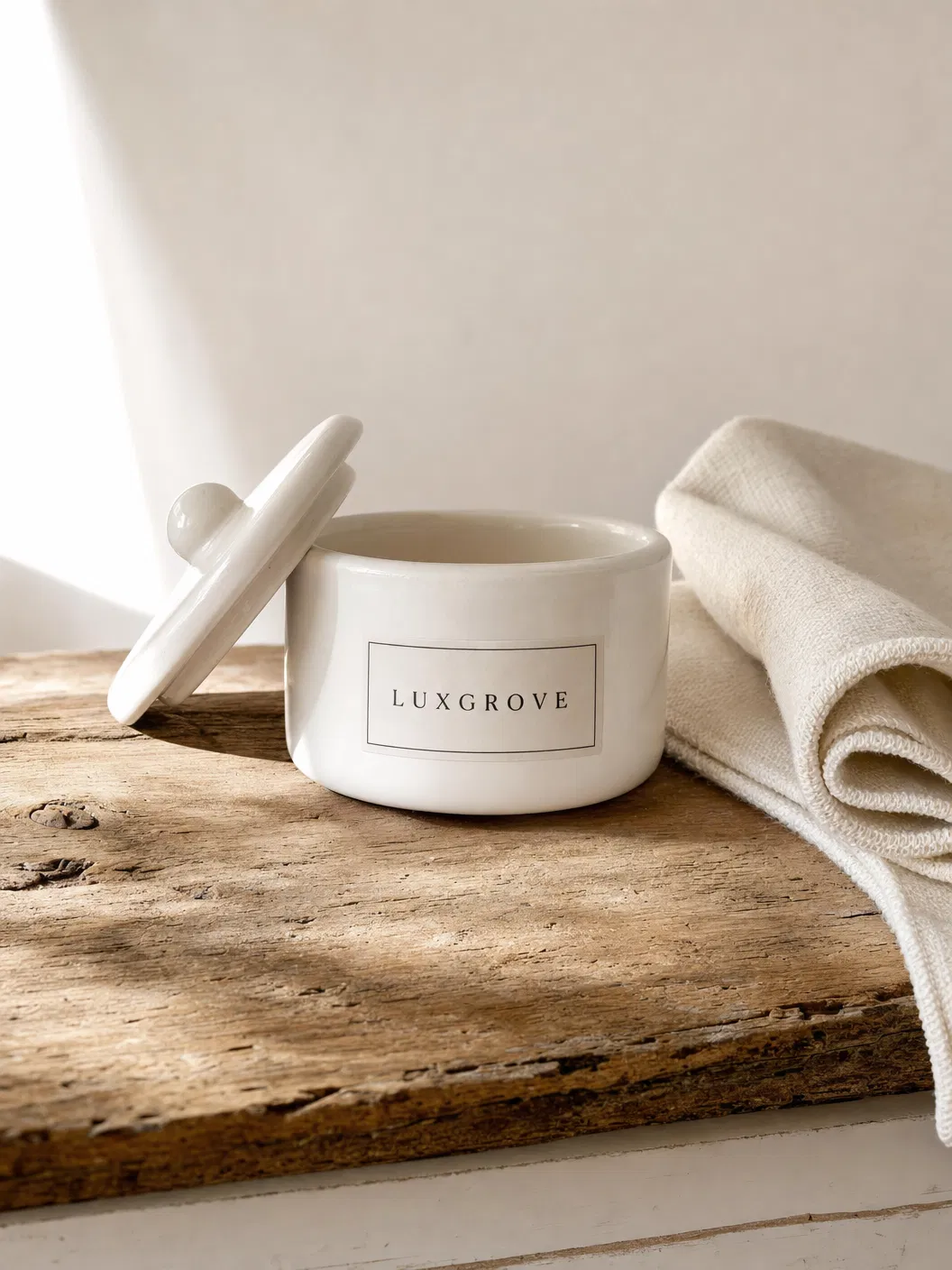
It's made by a small company in the US called Luxgrove. The jar is 8 ounces. It costs $39.
Plant oils that penetrate the wood and harden inside the grain. Beeswax to seal them in. Nothing petroleum. No solvents. No silicone. Nothing that strips or alters the finish that's already there.
You wipe it on with a soft cloth. Wait twenty minutes. Wipe the excess off.
That's the whole instruction sheet.
I did the first pass that Thursday. The salve disappeared into the walnut almost immediately, the way water disappears into a dry sponge.
By the next morning, the desk was back.
Not new. Not refinished. Not different.
Back.
The walnut had its depth again. The grain came forward. The gray was gone. I ran my fingernail along the chipped edge and nothing came off. The finish had something to hold onto again, because the wood underneath wasn't empty anymore.
I sat at the desk for the first time in a year.
Then I started using the same jar on everything else in the house.
"I bought one jar to try on a dining table I'd given up on. I now have four jars in my house. Walnut desk, oak floors in the entryway, butcher block in the kitchen, and the cedar deck furniture. Same jar works on everything."David K. — verified buyer, May 2026
It is not just for old wood
The same jar works on:
- Dining tables that have lost their depth from sun and table-setting wear
- Kitchen cabinets that look dry and tired around the handles and edges
- Hardwood floors in entryways and high-traffic rooms where the finish has started to go gray
- Butcher blocks and cutting boards (food-safe, no mineral oil, no solvents)
- Cedar and teak outdoor furniture that has gone silver from rain and sun
- Banisters and stair handrails worn from forty years of hands
- Antique pieces of any wood, any age, any finish

It doesn't matter whether the wood is 1860 or 2018. It doesn't matter whether it's oak, walnut, cherry, mahogany, pine, maple, cedar, or teak. The mechanism is the same. Wood loses oil. The salve puts oil back. The wax seals it in.
"I used it on my grandmother's piano bench and three pieces of garden furniture in the same weekend. Different woods, completely different conditions, both came back. I keep a jar in the garage now and a jar in the house."Patricia M. — verified buyer, April 2026


Why the next month matters more than the last six
The wood is losing oil right now. Today. While you're reading this.
It doesn't stop because you noticed it. It doesn't slow down because you're researching. Every month that passes, more oil leaves the grain, more of the resin on top loses what it was gripping, and more of the flaking and graying becomes harder to bring back.
The desk in my office had been losing oil for forty-five years before I touched it. It still came back. But the guys who do this for a living all said the same thing: the longer a piece sits dry, the longer the first pass takes to settle in, and the more passes you need.
A piece caught now needs one or two applications.
A piece caught in five years might need four or five.
A piece that's been dry for decades and develops cracks in the wood itself is a different conversation. That one goes to a restoration shop. That one costs $1,400.
A note on supply
The salve is made in small batches in the US. The beeswax comes from a single supplier in upstate New York that ships four times a year. They can't scale production at the supplier level, which means batches sell out and the restock lag is typically four to six weeks.
The current batch is shipping now.
The next batch is scheduled for late summer. If you've been thinking about this, do not wait for the next batch.
$39. Free shipping. 60-day guarantee.
A 60-day guarantee, because the product is hard to believe in writing
Try it on one piece
The corner of a dining table. One arm of a chair. One drawer front. The edge of the kitchen counter where the wood looks dry.
If the depth doesn't come back, if the gray doesn't lift, if there's no visible difference within a day, send the jar back. Full refund. You keep what's left of the jar.
I am telling you what Tom told me on a Tuesday in March.
"Stop polishing. Start feeding. Buy one jar. Try it on the corner of the worst piece in the house. If you don't see it the next morning, throw the jar in the trash and never think about it again. But you will see it. Everyone does."Tom Reilly
He was right.
How it worked for other people
The mechanism is the same for everyone. Wood loses oil. The salve puts it back. The wax locks it in. But the pieces people bring back are all different. Here is what a few of them looked like.
"I had a dining table that had been in the family for thirty years. The top had gone completely flat and gray. I tried it on one corner on a Thursday evening. By Friday morning I called my sister to come look at it. She thought I'd had it refinished."
Karen L. — verified buyer

"My kitchen cabinets were installed in 2004. Around the handles and edges they had gone almost white. I'd been told I needed to repaint them. One jar, one afternoon. The wood came back. The handles look right again. I didn't repaint anything."
Janice M. — verified buyer
"The hardwood floors in my entryway had gone gray from foot traffic. I'd been quoted $3,200 to refinish them. I used the salve on a Saturday. The gray lifted. The grain came back. I cancelled the refinishing appointment."
Marcus T. — verified buyer


"I have an oak dresser from 1968 that belonged to my grandmother. It had been in a garage for twelve years. I expected nothing. The grain came back on the first pass. The second pass two weeks later brought it almost all the way. I cried a little, honestly."
Diane R. — verified buyer

See it working
The mechanism is easier to understand when you watch it happen. These are real pieces, real applications, no editing.
$39. Free shipping. 60-day guarantee.
Luxgrove Wood Care Salve. Plant oils to feed the wood. Beeswax to lock them in. Made in small batches in the US. 60-day guarantee. Free shipping on every jar. Current batch shipping now — next batch late summer.